I've just noted that it is five years since starting the Glass Tips blog.
And this is the 600th entry.
Monday, 1 July 2013

Sunday, 30 June 2013
Installing Your New Kiln
You have your new kiln unwrapped. Now
where to put it?
First read the manufacturer's
recommendations. If you are still uncertain there are a number of
things you should think about.
One of these is getting access
around it. You need to be able to work around three sides ideally if
it is a top loader, two sides for smaller kilns is usually enough.
If it is a front loading kiln you only really need to consider the
space in front of the kiln. You are going to be carrying pieces,
even shelves to the kiln so you need enough space for you and the
shelf in front of the kiln. At the sides you only really need enough
space for yourself.

Getting access is part of the
consideration of distances from other things. Often people
are worried about the heat that the kiln will be giving off. Kilns
are well insulated to reduce the costs of firing, so the heat release
is slow. Still, you want at least 300mm space from anything
inflammable.

You also will want to think about the
support surfaces. Sometimes the kilns come with their own
stands, but usually these are to raise the kiln to working height.
You may want to protect against any (unlikely) meltdowns, so you
should put the kiln on steel, ceramic or concrete surfaces. There
are a number of table top models and in these cases a large ceramic
tile or ceramic fibre insulation under the kiln is an entirely
adequate safety precaution.

You will need a place to put things
down just before loading the kiln, so placing the kiln near adequate
flat surfaces is important.
You also should think about putting the
kiln out of the main traffic areas of the studio to avoid
disturbance to the kiln or the rest of the studio activity.

Now that you have the ideal location
for the kiln you have only begun.
You need to make sure the kiln is as
level as possible. The first stage of this is to make sure
the casing is relatively level. Use of a spirit level on the top
front and sides is probably enough. Put hard spacers under the legs
to level things up. You can if you want, level the internal base of
the kiln instead of the casing. Many find that more re-assuring. Then
you need to put the kiln furniture to hold up the kiln shelf into the
kiln and the shelf on top of that. This is the part that really
needs to be level. Spend time on it. Place pieces of ceramic fibre
under the shelf supports as required to get things really level. A
circle or three-way level is good for this purpose. The shelf needs
to remain level to get good, consistent results. Any time you move
the kiln, the shelf, or the supports, you need to check the level of
the shelf.
Once you have the shelf level you are
ready to do a test fire. Normally you need to have a firing
without anything in it to burn out binders used in the making of the
kiln. There is no reason that you cannot have the furniture (shelf
and supports) in the kiln for this first firing as they need to be
test fired too. In addition you can run a test to discover where the
cool spots are in your kiln (every kiln has them). Look up and
follow this technical note on how to run a test for discovering how even the heat
is within your kiln.
Once you have run your test firing, you
will want to protect the kiln floor from any spills of hot
glass and the glass from sticking to your furniture. If the
manufacturer has given you some kiln wash with the kiln mix it up
about 1 part powder to 5 parts water and lightly paint the floor of
the kiln - not the walls. The kiln furniture needs this too as does
the shelf. This note on applying kiln wash will give you information
on how to do it.

It is important that you have some
protective gear to do the work with kilns. At first and for
fusing temperatures, you need eye protection and gloves. You need to
look frequently and briefly into the kiln to monitor the firings,
especially at the start of your career. For this you need eye
protection. Sun glasses will not do as you need protection against
infrared rather than UV light. There are a number of things that will
do from welders' goggles to special lenses as used by bead makers.
Use them! Every time. You will need gloves, at the start leather
gloves with sleeves going half way up your forearm (such as welders'
gloves) will do. Later and for higher temperature work you will need
better and much more expensive gloves, sleeves, and body protection.
These things will get you off to a good
start.
Tuesday, 25 June 2013
Brown Ceramic Fibre Paper and Board
A
frequent concern about fibre board and fibre paper that appears brown
when peeking into the kiln is that something has gone wrong.
Ceramic
fibre papers and boards have organic binders that have to burn out
during the firing. What starts as white later turns brown as the
binders are burning out – often the smell is like burning paper.
As the binders burn away, the fibre paper or board returns to its
original colour.
The
amount of smell or smoke is dependent on the amount of ceramic fibre
you have in the kiln. If you have a thick board, you should think of
venting the room, as there will be a lot of smoke.
Also
if you are firing a large piece of glass, you should think of firing
the binders out of the ceramic fibre before placing the glass on top.
If you do not, the binders may not fully burn out, leaving marks of
the smoke fired into your glass.
Thursday, 20 June 2013
Colour “theory”
You will need to decide which colours combine well, whether they are toning, harmonious or complimentary. By getting to grips with the rules of colour, you can give your work a unity of concept.
Primary colours
Primary
colours
are three key colours - red, blue and yellow. They cannot be made
from any other colour.
Secondary colours
If
you mix equal amounts of the primary colours, you get the secondary
colours
- purple, green and orange.
red
+ yellow = orange
red + blue = purple
blue + yellow = green
red + blue = purple
blue + yellow = green
Tertiary colours
If
you mix a primary with a secondary colour, in a ratio of 2:1, you get
a tertiary
colour. red-orange, blue-green etc.
 |
| Colour wheel example |
Cool versus hot
Look
at the colour wheel and you will see the left hand side of the
colours are 'warm' or 'hot' and the ones on the right are 'cool' or
'cold'. This is useful when you want to create a mood in
a particular room or need to make your space cosier or lighter.
Neutrals
Neutrals
are one of the easiest groups of colours, or non-colours to work
with. They don't appear on the colour wheel and include Black, Grey,
White and sometimes Brown and Beige. They all go together and can be
layered and mixed and matched. No neutral colour will try to dominate
over another.
Accent colours
An
accent colour is a colour used in quite small quantities to lift or
to add punch to a colour scheme. An accent colour should be in a complementary colour.
It works best if it's a bright, vibrant colour. Accent colours are
perfect if you're concerned about using strong colour - simply add a
splash of an accent colour. Keep most of your piece in shades and
variations of one single harmonious colour. Then pick out just a few
objects in an accent colour.
Clashing colours
Using
clashing colours is thought to be inappropriate in formal settings.
But in other settings they can provide drama, if they are used
carefully. If they are of equal tonal strength, you can mix them
together. You don't have to stop at two, you can try three or four.
But if one is paler or weaker than the rest it will get lost in the
overall scheme.
Saturday, 15 June 2013
Sticky Labels

There
are a number of products to help get the label adhesive off the
glass. However you need to make sure you get the product residues off
the glass before firing.
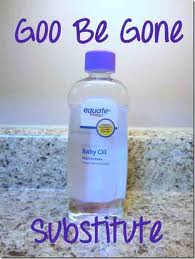


A
simple and usually effective method is pull label off, use white
spirit or turpentine substitutes with a plastic kitchen scrubber or fine brass wire brush to remove the adhesive. Then clean
up with alcohol or methylated spirits, followed by good cleaning with
your normal cleaning method, as here.

Monday, 10 June 2013
Why do kiln shelves break?
Kiln
shelves are made of clay – a very hard clay, sometimes called
mullite. So when firing you need to remember that like other ceramic
materials it can be heat shocked.
 |
| examples of broken shelves |
The
recommendation is that you put the shelf on supports to keep it above
the base of the kiln and allow air to circulate around both the top
and bottom of the shelf.
The
question remains, why do the shelves break. There are at least two
reasons: physical impact and thermal shock. It is possible to knock
the shelf while moving it around the studio. This impact does not
always cause a break, but sometimes creates a stress point that later
can develop into a crack and break. You can sometimes see the start
of the crack from the edge of the shelf. In this case, you can
either continue to use the shelf with support under the crack or
dispose of it immediately, because at some point during a firing it
will separate.
The
thermal shock that causes the break occurs because (usually) uneven
cooling. It seems the shelves are pretty resistant to rapid heating,
but less tolerant of rapid or uneven cooling. In general un-dammed
fusing and using moulds elevated a little from the shelve do not
create that uneven cooling.
However
placing a large refractory mould directly on the shelf can promote
cracking either immediately or on subsequent firings.
 |
| Broken shelf with casting moulds laded to one side |
The
main culprit in any breakage seems to be large or heavy and damp
refractory moulds directly on the shelf. The mould is giving off
water vapour which cools the immediate area around the mould. So as
the temperature rises, the covered part of the shelf stays cool, in
addition to being shielded from the general heat of the kiln while
the uncovered parts of the shelf rise in heat. At some point the
temperature differences in the shelf are too great for its strength
to resist. The solution is to remove the shelf from the kiln and
place the mould, slightly raised, on the floor of the kiln. The
bricks, being softer, do not react in the same way as shelves to
uneven heating.
For
thick fusing with dams all around, it seems best to do this on a
shelf that almost fully covered with glass and dams. This promotes
more even heating and cooling of the shelf than having a small part
of the shelf covered. It does mean having different sized shelves,
but then you may already have some of them due to the breaking of
other shelves. Just cut the broken shelf to the size you want on a
tile cutter.
Wednesday, 5 June 2013
Small Glass Balls
You
can create tiny balls of glass in several ways. You can cut small
squares of glass as small as 5mm, place them in the kiln and fire to
at least a rounded tack fuse temperature.

You
can do the same with frit. Make your own by smashing the glass
within some container, which can be as simple as newspaper. Sieve
out the finer and larger glass and put the chosen size into the kiln
at the same temperature. This will give more irregular pieces than
squares, so you may want to include these pieces of frit in a regular
fuse firing in the spare spaces.

You
can also make balls individually by putting the piece of glass on a
graphite block and heating it up with a blow torch. This will round
up even a rectangular piece of glass. You can put these into a fibre
blanket, but it really is not necessary as the round form will
contain a lot of stress that will later be removed by subsequent
firing. It is possible to over heat some glass, especially
opalescent, so be careful about the amount of heat you apply.
Saturday, 25 May 2013
Slumping Etched Glass
In
general slumping will not remove the evidence of etching. There will
be very little effect on etching on the bottom even at fire polishing
temperatures.
When
the etching is on the top side exposed to the radiant heat of the
elements, you need to be careful to use the lowest practical
temperature for slumping. It is possible to achieve a satin finish
to a sandblasted surface at 677ºC with a soak of two hours. It
depends on the delicacy of the etching texture as to whether the
slumping will affect it much.
The
more the glass will need to move during slumping the more distortion
will be apparent in the finished piece. This can be minimised by
using a low heat for considerable time.
If the
mould is very detailed, it would indicate that etching should be done
before the slumping due to difficulty in attaching the resist to the
shaped glass, unless you paint it on. But again, a significantly
long soak will be required to achieve the detail of the mould.
If it
is a simple and relatively shallow slump it may be easy to etch after
shaping. It is a question of how easy it is to get the resist to
conform to the curve.
Monday, 20 May 2013
Keeping Copper Inclusions from Oxidising

The
colour change in the copper foil is due to oxidisation - if the
copper foil is completely deprived of oxygen it stays shiny and
copper coloured. If you leave copper exposed at all it will go
metallic blue or even bottle green, mostly it turns a lovely burgundy
red colour- an intermediate oxidisation stage.


Klyr fire or borax solutions may help the copper stay bright.
Through
doing some experiments with art school students, I have found the
speed of firing is critical in an electric kiln. In a gas kiln the
speed is normally fast anyway and produces better results than an
electric kiln. It also is a kiln with a reducing atmosphere rather
than oxidising one of an electric kiln.

Summary:
The main elements in keeping copper inclusions (and by extension, other metals) bright is to keep the metal from oxidising. Two elements are important in this:
- Keep oxygen from the metal
- Reduce the time the metal is exposed to high temperatures
Various methods are used to keep the metal from exposure to oxygen. Some of these involve:
- coating the metal with fluxes to reduce the amount of oxygen in contact with the metal.
- using a reducing atmosphere, such as a gas kiln.
- placing an oxygen hungry material in the kiln with the glass and metal.
- coating the metal with glass powder before encasing it within the glass.
Reducing the heat exposure of the metal also indicates that firing fast would provide better results. This requires very even heating within the kiln to avoid heat shocking the glass. This is where a gas kiln is most advantageous - it can be fired fast without breaking the glass and it has a reducing atmosphere within it.
In general, it is easier to make use of the effects of the oxidised metal rather than striving for bright metal inclusions.
Wednesday, 15 May 2013
Fixing Paint for Transport
The
very cheapest hair spray works well with glass paint, if you need to
transfer your painted glass to another place for firing. Complete the painting and then spray with cheap hair spray as you would to fix
a charcoal drawing. This will hold the paint firmly during transport
and does not affect the paint during firing.
Subscribe to:
Posts (Atom)